by Prof. Ir. Ts. Dr Mohd. Fadhil Md Din
edited by Muhammad Hafizie Che Mi
We are now living in the Intelligent Era, a time when devices, sensors, and digital systems can continuously see, measure, and help us understand the environment. This shift is powered by the Internet of Things, smart monitoring systems, and digitalisation. For academia, industry, and environmental management, these tools are no longer optional. They are becoming basic infrastructure for green transformation and sustainability.
In simple terms, the Internet of Things means small devices and sensors placed in real-world locations such as rivers, buildings, factories, and campuses. They automatically collect data on water quality, air pollution, temperature, energy use, and other environmental indicators. That data is then sent to digital platforms where scientists, engineers, and decision-makers can monitor conditions in real time.
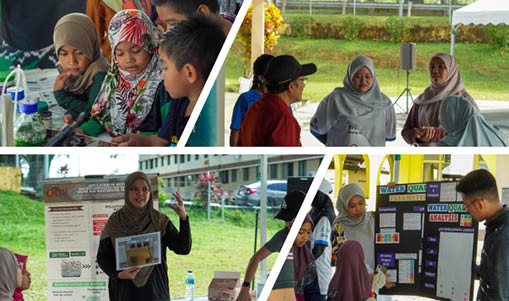
UTM-MHB River Rehabilitation Community Program — volunteers and researchers conduct field monitoring at the rehabilitated river site (2022–2025).
This is a big improvement over traditional monitoring. In the past, researchers often collected river water once a month and sent it to the lab. The process was slow, expensive, and easy to miss sudden pollution events. Today, smart sensors can check water quality every minute, giving early warning systems the chance to detect problems immediately and protect both ecosystems and public health.
Universities are also changing. They are moving beyond classrooms and becoming living laboratories where the campus itself is used for teaching, research, and problem-solving. Smart campuses now use digital dashboards to track electricity consumption, water use, waste generation, and carbon emissions. This helps institutions cut waste, lower operating costs, and support climate goals in a practical way.
The shift also changes how students learn. Instead of only reading textbooks, they can deploy sensors in local waterways, collect live data, and analyse it using digital tools. A clear example of this is the Sungai Buluh rehabilitation programme, launched by Malaysia Marine and Heavy Engineering in collaboration with Universiti Teknologi Malaysia and the Pasir Gudang City Council. Researchers and students deployed low-cost water quality sensors directly into the river to measure pH, dissolved oxygen, turbidity, and biochemical oxygen demand in real time. The data is transmitted wirelessly to a cloud dashboard that community members, local authorities, and student researchers can all view together. Within 24 months of bioremediation interventions combined with this real-time monitoring, dissolved oxygen levels in the target river stretch improved by an estimated 40 percent. This practical application helped move the river from a heavily polluted Class IV toward Class III under the National Water Quality Standards.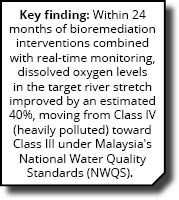
Industry demand for these competencies is growing just as fast. Manufacturing, water utilities, energy, agriculture, and urban development are all moving toward data-driven decision-making. Companies now use real-time environmental and operational data to improve efficiency, reduce waste, and stay compliant with environmental regulations. In other words, if you cannot measure it, you cannot manage it.
That is why digitalisation is such an important part of the global green transformation. It provides the accurate, continuous, and reliable data needed to act quickly. Smart water systems can detect pipeline leaks before too much water is lost. Smart energy systems can adjust electricity use to reduce carbon emissions. Smart waste systems can optimize collection routes and improve recycling. These are practical ways of supporting the Sustainable Development Goals, especially those focused on clean water, clean energy, sustainable cities, and climate action.
The change is not only technical but also changes research culture. Environmental scientists now need to work with data scientists, engineers, and computer specialists. When these groups collaborate, they can create better solutions to environmental problems. Digital dashboards also improve transparency and governance by making environmental data more visible to policymakers, industries, and communities. That openness strengthens accountability and supports broader sustainability principles.
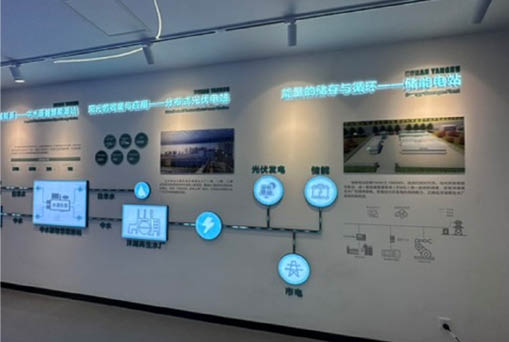
UTM–CSUST Consortium field demonstration of IoT cloud-based smart monitoring system for water and waste recovery
Technology alone is not enough, however. Human capacity matters just as much. Scholars, students, and professionals need digital literacy, data analysis skills, sustainability thinking, and system integration skills. Universities should update curricula to include artificial intelligence and environmental digitalisation so that graduates are ready for the world they will enter.
This is why the role of academia is so important. Universities are not only places that produce knowledge but also talent developers and innovation hubs. By integrating smart monitoring systems into teaching, research, and campus operations, they can prepare future-ready professionals who can support sustainable industries. Government agencies, industries, and communities also need to work with academic institutions so that research can be applied in the real world and students can gain hands-on experience.
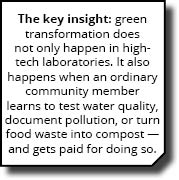
A great example of this grassroots collaboration is a 2025 social sustainability initiative targeting the Pasir Gudang Baru community. It was launched with a specific mission to teach residents, especially youth and marginalised workers, practical green skills that lead to real employment. The programme covers composting and organic waste valorisation, basic environmental monitoring using smartphone-linked sensors, water quality testing, and environmental entrepreneurship.
 These local community efforts run parallel to larger international collaborations. A recent corporate social responsibility and research consortium between Universiti Teknologi Malaysia and Changsha University of Science and Technology in China perfectly illustrates this global reach. Together, they developed a joint smart environmental monitoring system for water and waste recovery applications. This system brings together sensor networks, cloud computing platforms, and artificial intelligence-assisted data analytics to track wastewater treatment performance and solid waste recovery rates in near real time. The cloud system allows researchers in both Johor and Changsha to view the same data simultaneously, collaborate on modelling, and propose operational adjustments without needing to be physically on-site.
In the end, the Intelligent Era gives us something we never had before, a clearer and more continuous picture of our environment. With better data, we can make better decisions, prevent damage earlier, and build systems that last. Sustainability is no longer only about going green. It is about being connected, intelligent, and driven by data.