by Prof. Dr. Naomie Salim
Edited by Dr. Zuhaili Idham
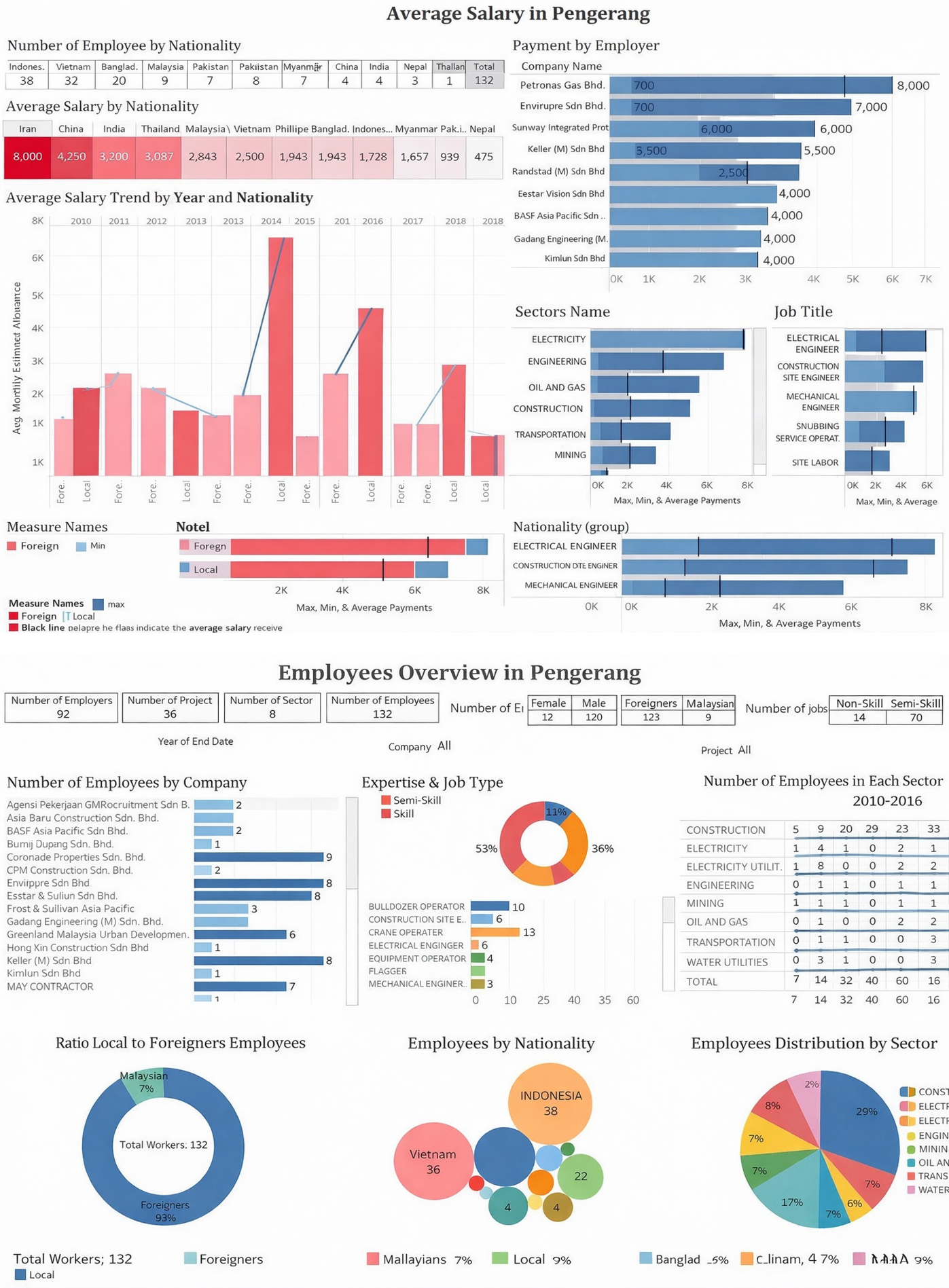
Fig.1: Sample dashboards for the Profiling of Foreign Workers in Pengerang project (Institut Inovasi Strategik Johor, hypothetical data).
Data has become an unseen current guiding modern life. As humans, we make decisions every day. We make decisions on what to buy, what to watch and and how to reach our destinations. We used to rely heavily on instinct, experience, and intuition, making each choice a small gamble based on what we knew about the world. Our decisions improve when we understand what is happening, why events occur, what might unfold next, and the consequences of each option.
Luckily, in this digital era, the world, its people, events, nature, cities, highways, and institutions can be represented through data. The dynamics of interactions between objects in the world are modelled through an integrated data flows, like an unseen current beneath the surface of modern civilisation. Data does not only describe the world. It helps understand reasons behind every happening, predict the future and suggest what can be done to reach a desired state of affairs. Machines can now learn from what is happening from our behaviour, and increasingly guide how societies function. The moment data began touching everyday life, it started shaping people’s choices, influencing public decisions, and transforming how systems and institutions operate. Data influence can be more powerful than any policy or design. It has become a living, breathing ecosystem that shapes our behaviours, choices, opportunities, and even our beliefs. Now, without realising it, we move through life guided by digital signals and algorithmic nudges, patterns derived from data collected in databases, from sensors, cameras, and the digital traces we leave behind.
Imagine trying to understand why certain sectors in Pengerang depend on foreign labour. Dashboards such as those in Figure 1 highlight sectoral dependence by nationality, salary competitiveness, and skillset gaps. These insights help explain hiring trends and identify training required for local workers.
In another example, daily analysis of social media sentiments, such as the one shown in Figure 2, can signal market confidence. Companies can use these signals to determine the best timing for an Initial Public Offering (IPO).
Decision analytics also helps institutions appoint leaders. By examining data across institutional databases, systems can suggest the most suitable candidates and propose training programmes to enhance their performance (Figure 3).
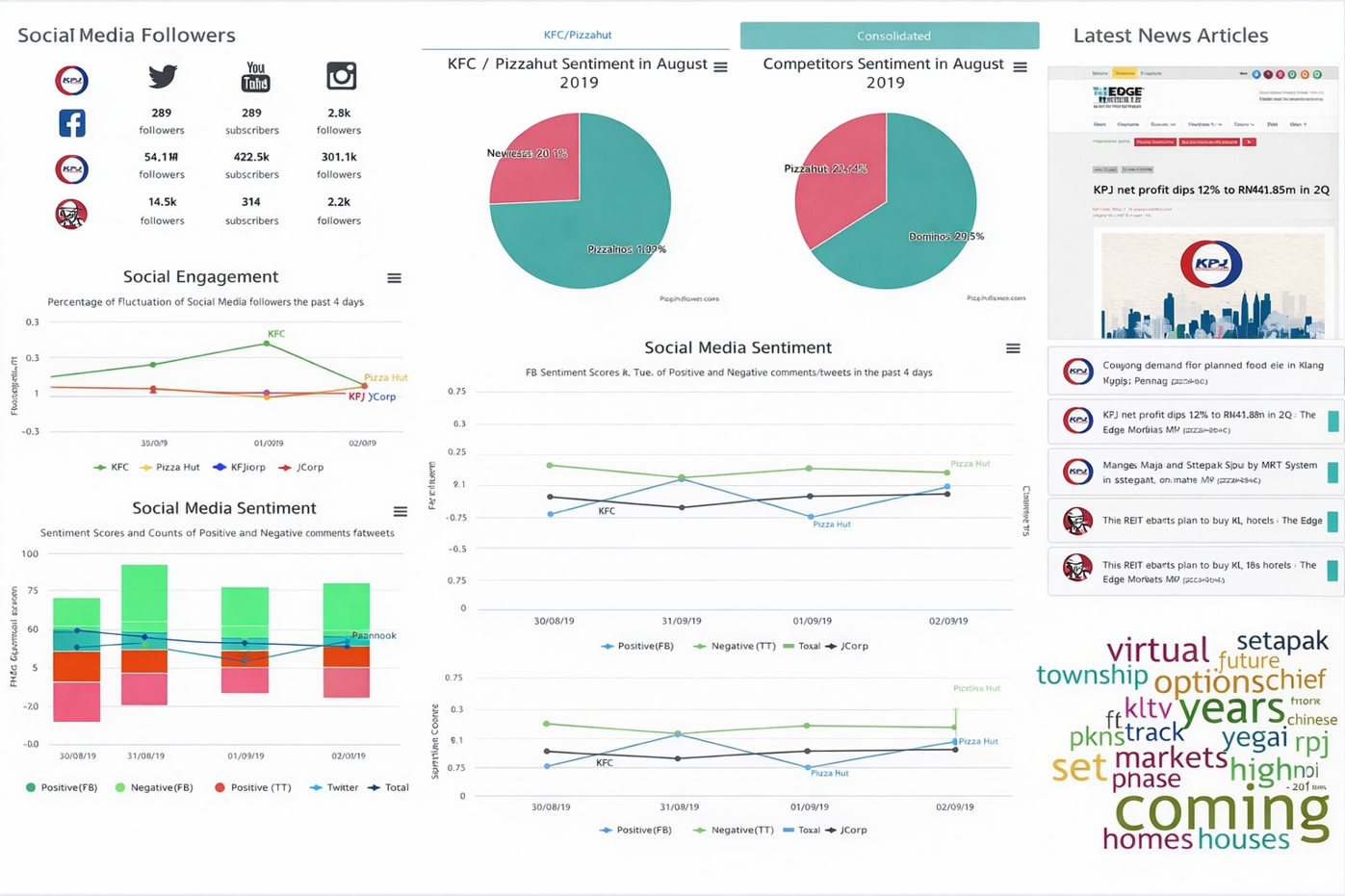
Fig. 2: Sample Social Media Sentiment Analysis Dashboard for the Data Advisory for Johor Corporation (hypothetical data).
Private hospital chains, as shown in Figure 4, use admission data analytics to forecast future bed capacity and plan expansions. This improves service readiness and long-term investment decisions.
As we can see from these examples, institutions no longer wait for quarterly reports or formal submissions to act. Decision-making is gradually shifting towards real-time responsiveness. Decision-making is no longer reactive—it is pre-emptive.
The Moment Data Began Anticipating Us and Then Move Us.
Every action we take, what we click, how long we hover, how fast we walk is now being converted into structured signals. These signals are then used to anticipate what we might do next. Facebook uses our browsing data to suggest food, friends and things we are likely interested to buy. When we order car to go somewhere, Grab prioritises drivers and modifies pricing through live heat maps. When we order food through Panda, our order data is used by Food Panda to boost restaurant visibility using peak-time analytics. When we use Waze, Waze use our data for route management and congestion control. What we search through google is used by trend analysis algorithms to shape what issues rise to public attention.
These examples show how technology responds before we even ask. Waze detects congestion and redirects us before we realise there’s traffic ahead. Facebook, Shopee, Lazada or TikTok Shop recommend products before we search for them. Touch ’n Go eWallet flags suspicious activity before we become aware of it. When systems begin predicting rather than reacting, it shifts from mere computational capability to behavioural influence. This is the turning point where data moves from passive information to active participation in human experience.
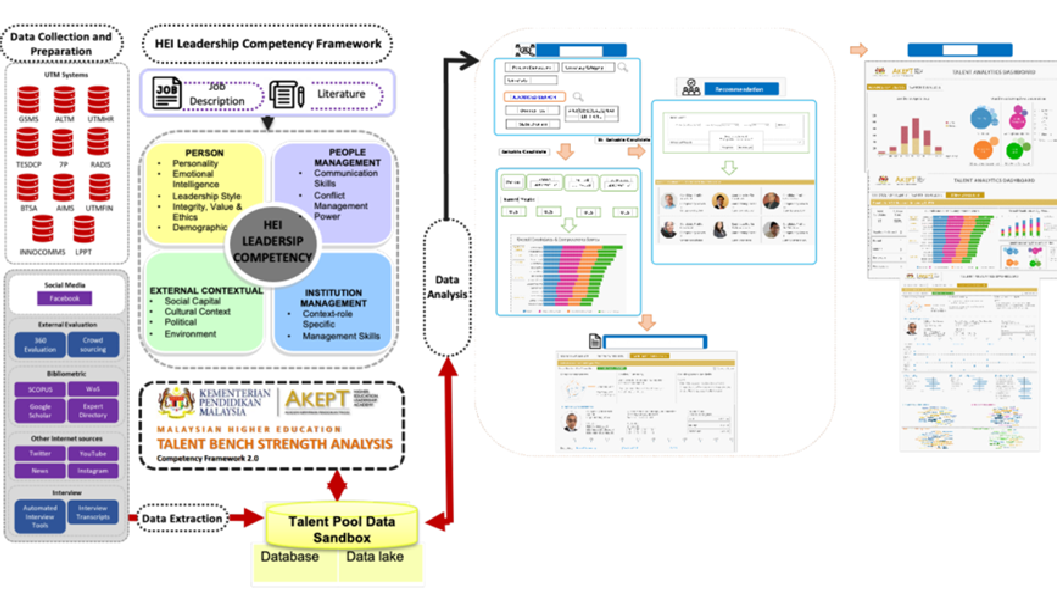
Fig. 3: Schematic of a system for suggesting candidates for leadership posts (AKEPT, hypothetical data).
Beyond individuals and institutions, data reshapes social structures, equity, and national systems. PADU data is used to support fair subsidy policies, reducing leakages and improving socio-economic targeting. DOSM dashboards can help track inflation trends and inform cost-of-living initiatives. Digital agriculture systems in Sarawak can provide farmers with heat, soil moisture, and yield forecasts, lifting productivity in rural areas.
Data now influences where we go, what we believe, how we shop, when we seek help, and often, what we choose not to do. Its impact is quiet but profound. When data touches life, it must elevate humanity itself. The true potential of data is not in predicting our next click, but in shaping our collective future. It should enhance dignity, promote inclusion, and deepen societal resilience. In a world where data increasingly touches life, we must ensure that every touch advances human well-being.
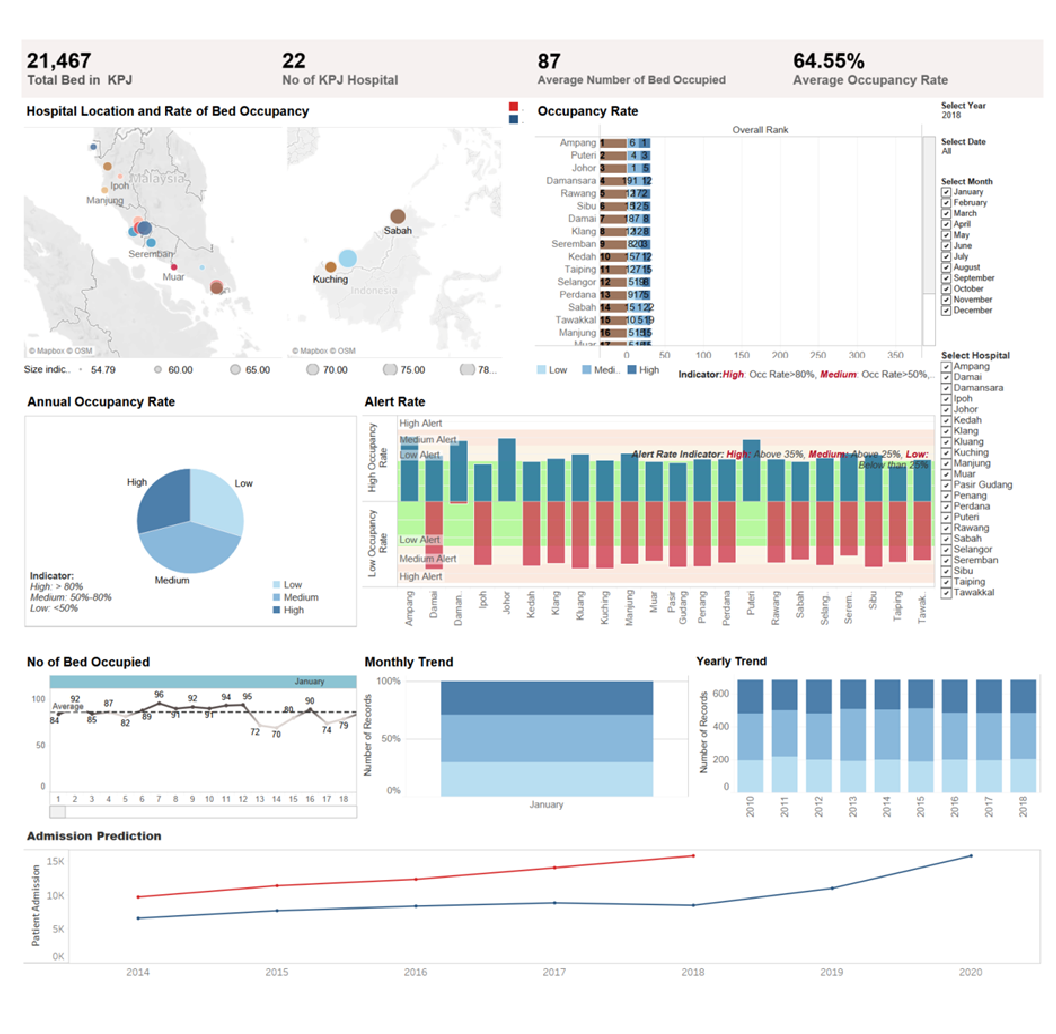
Fig. 4: Sample Hospital Analytics dashboard (hypothetical data)
—

Prof. Dr. Naomie Salim is the Director of the UTM Big Data Centre and a leading Malaysian scholar in data science and computational informatics. A PhD graduate from the University of Sheffield, she has published more than 400 research papers, secured nearly RM5 million in research funding, and supervised 50 PhD graduates. Her innovations in big data, search algorithms, and intelligent analytics have been adopted by major organisations including Johor Corporation, MAMPU, MMHE, KKR, SSM and the Ministry of Higher Education. Recognised as a Top Research Scientist Malaysia (2020), she has also led national initiatives such as the Malaysian Big Data Research Excellence Consortium. Her work continues to shape how data transforms institutions and society.